
UFOs and Sci-Fi: Spielberg, The Age of Disclosure and a Complicated Relationship
Modern science fiction and modern Ufology have influenced each other in complicated ways and a new documentary and new sci fi movie highlight these themes

This week, a billboard in LA and in New York’s Times Square revealed Steven Spielberg’s latest project about aliens with the tagline “All will be disclosed”, which has generated excitement both in the UFO community and among the general public.. The trailer for the new film, which presumably involves an evolution of Spielberg’s thinking since 1977’s Close Encounters of the Third Kind and 1982’s E.T., is coming this week. Although it may not the final title, one of the code names for this project has been simply, Disclosure, which means that Spielberg is timing his movie right in the middle of a new wave of interest in UFOs (now called UAP).
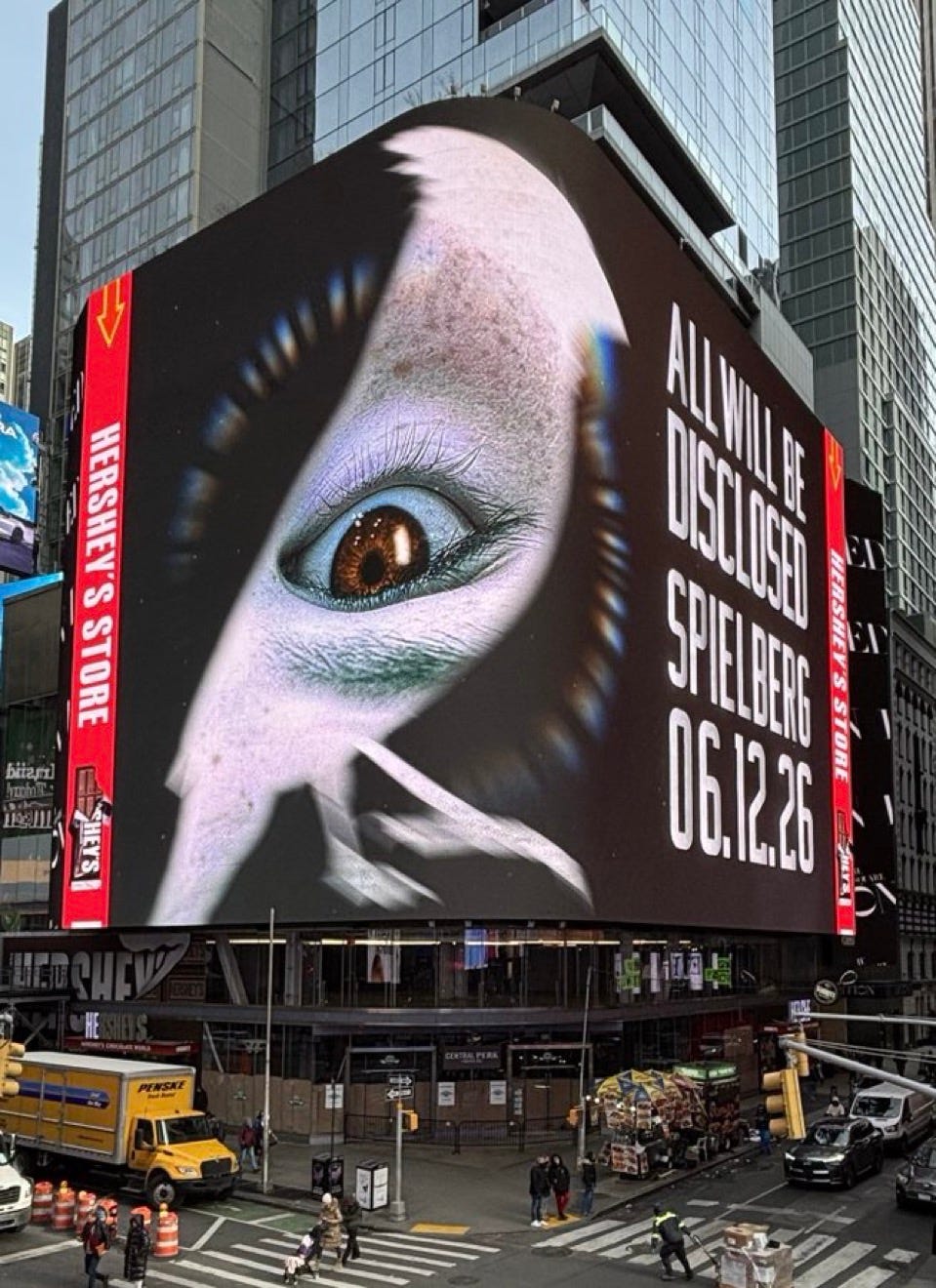
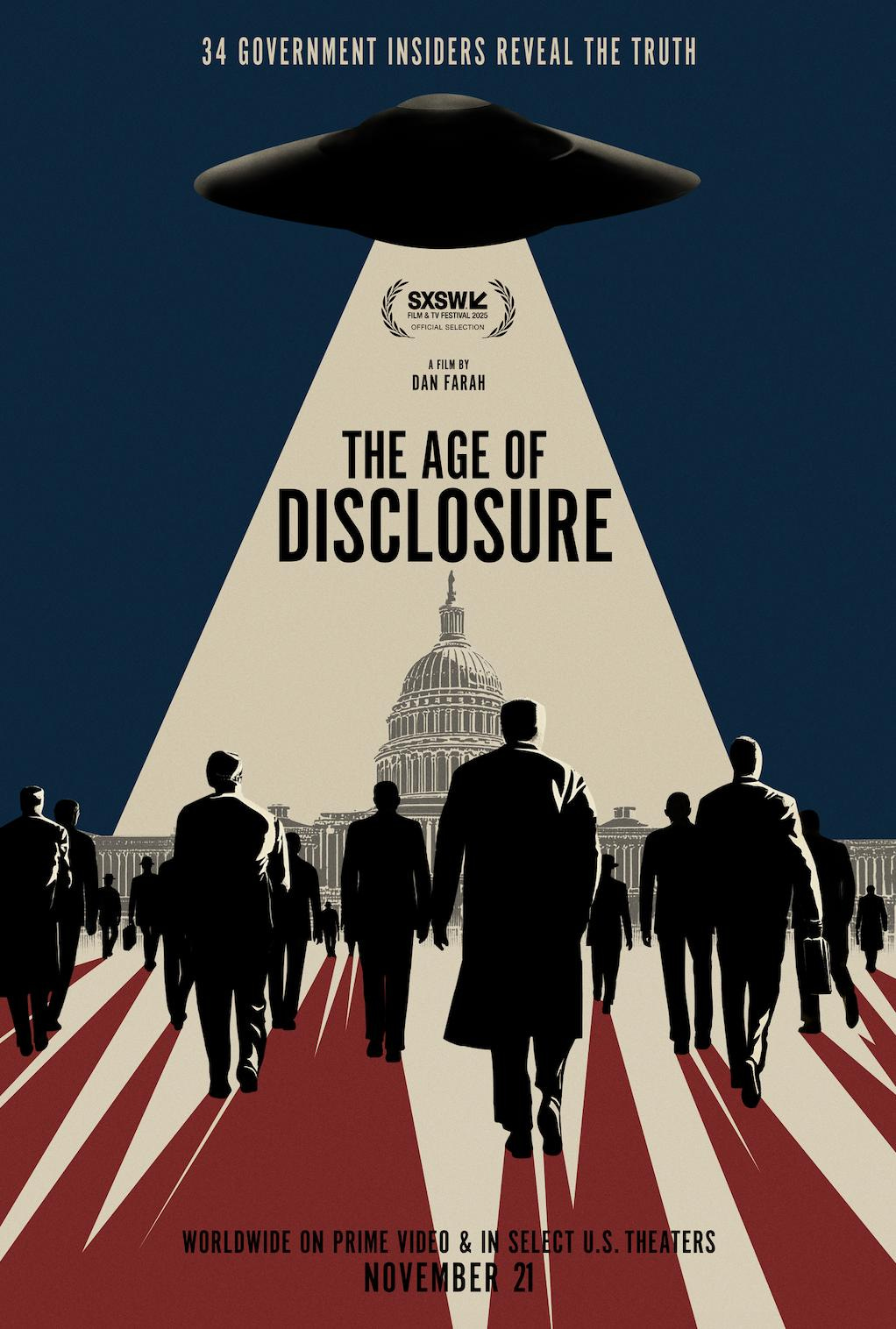
This all is happening on the heels of a new documentary, The Age of Disclosure, that has generated a lot of buzz, reigniting an age-old question that has been explored in science fiction: Are We Alone? In this essay, I want to use the claims in this new film, about secret alien crash retrieval programs and national security threats, to explore the complicated and inter-related history of science fiction and ufology.
The new documentary has received exposure well beyond the usual UFO documentary, a growing sub-genre of documentaries which are usually only consumed by UFO enthusiasts. This film and its creator, Dan Farah (no stranger to Hollywood as he was an executive producer of Ready Player One), have been on the largest podcast in the world, The Joe Rogan Experience, and featured in many mainstream news outlets including Fox News, NBC news, and CBS News.
The Age of Disclosure contains explosive claims based on interviews with 34 current and former government employees, including Secretary of State Marco Rubio and former Director of National Intelligence James Clapper, alleging a government UFO coverup. The allegations go much further than the grainy videos which accompanied now well-publicized sightings by military of unidentified craft operating in our airspace, covered everywhere from The New York Times to the Washington Post to 60 minutes. The new film’s whistleblowers allege that we have recovered crashed alien* craft, including bodies of the potentially extraterrestrial* pilots (*more on this asterisk later).
Moreover, the interviewees claim that that we have had a reverse engineering program for 80+ years that has been illegally covered up not just from the public but even from Congress. The program has been attempting to figure out UFO technology that is significantly more advanced than anything in our current military or scientific arsenal. If that wasn’t enough, the film further alleges that we are locked in a new kind of cold war with adversary countries (namely China and Russia), who have their own programs, to exploit technology so advanced that it could give the victor de facto military dominance over the entire Earth.
To some who are not familiar with the UFO/UAP topic, these allegations may sound like they came out of science fiction, from shows like The X-Files. This overlap and evolution of science fiction narratives and modern Ufology is not entirely coincidental, though the nature of this overlap is perhaps more complicated than either skeptics or believers would have you believe.
In short, there is a feedback loop that has been at play between real world UFO narratives (i.e. UFO reports and those who study them) and popular culture (i.e. science fiction) over many decades. That science fiction has been wielded and weaponized by both skeptics and believers in ways which both enhance and severely limit the discussion around what UAP could potentially represent.
I recently completed my doctoral studies on the bidirectional nature of science fiction narratives in the real world, which is informally called “The Sci-Fi Feedback Loop”. During this time, I have also been peripherally involved with several serious academic efforts to investigate UAP, including Harvard’s Galileo project, and The Sol Foundation, which was set up by a Stanford professor, finding myself at the intersection of these two worlds, and have met some of the whistleblower in the film and who testified to Congress.
The relationship between sci-fi and modern Ufology has many contrasts: of love and hate, inspiration and exposure vs. trivialization and dismissal. Science fiction has been used both to raise the profile of real-world UFO narratives by giving them a much large audience, but also used by skeptics and scientists to dismiss the study of UFOs as “conspiracy theories” and “pseudoscience” and insisting they couldn’t be aliens. Even Elon Musk has dismissed the idea of aliens currently visiting us, stating several times that he and the team at SpaceX, which is currently responsible for 90% of the space launches, would know if aliens were in orbit around the Earth.
When talking about UFOs within academia and scientific circles, science fiction inevitably comes up. For one thing, sometimes modern mythology built by science fiction is the only practical way to have a serious discussion about UFOs and potential alien contact. Within academia and other techno-scientific circles, the subject has been stigmatized since the release of the Condon report. The Condon report’s much publicized conclusion, presented up front in the intro to the 1000-page document and echoed by media around the world, was that nothing had been gained for science by studying this phenomenon. These conclusions were used to shut down Project Blue Book, the Air Force’s long-standing public UFO investigation program in 1969. This shutdown supposedly ended the government’s involvement in the “UFO business”.
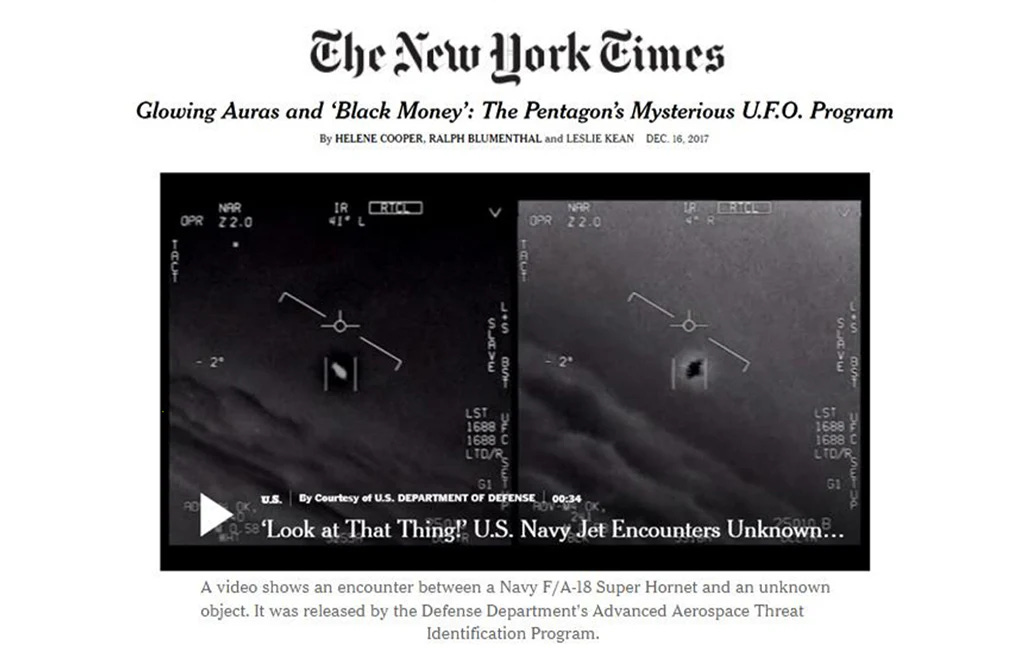
A 2017 article in The New York Times belied this statement when it revealed in a front page story that there had been on-going efforts at the Pentagon to continue to study UFOs, including one program championed and funded with millions of dollars by former Senate Majority Leader Harry Reid. This mainstream placement of the article and accompanying videos of UFO sightings, such as the Tic-Tac sighting off the coast of California in 2004, which pilots called “out of this world”, led to the current revival of interest the UFO subject in the media. Many of the whistleblowers in the recent documentary were involved in this particular government program that Reid funded and its successors, dubbed first AAWSAP and then later called AATIP.
The latest government public-facing UFO program, AARO (the All domain Anomaly Resolution Office) was, like its immediate predecessor, the UAP Task Force, set up by Congress after they had been briefed by many of the same whistleblowers who appear in The Age of Disclosure. As with Project Blue Book, the recent projects have found a number of sightings that have been classified as “unknowns”. While the normal scientific assumption would be that this is because there wasn’t enough information about the sighting to classify it as something human or ordinary (satellites, planes, balloons, atmospheric phenomena), this normal assumption would be wrong.
J. Allen Hynek, professor and head of the Astronomy department at Northwestern University, was also the principal scientific advisor to Project Blue Book. In his writings after Blue Book was shut down, Hynek made the important point that apart from the “insufficient data” sightings, there were always a number where there was enough data and information to rule out any known aircraft or atmospheric phenomena, putting them perhaps into a category that former Secretary of Defense Donald Rumsfeld might call “unknown unknowns”.
This is where science fiction comes in; it gives us at least a context for something whose nature is, as of yet, still considered “unexplained”. By using science fiction examples, this both gives us a concrete way to talk about scenarios of what they might be, but science fiction also ends up limiting the possible scope and respectability of the topic.
In the 1950s, there was a deluge of science fiction films about invasion by “Martians” in “flying saucers” and the trope of “little green men” took hold. Today this trope is often used as a way to laugh off the subject rather than take it seriously, as former New Jersey governor Chris Christie attempted to do in a republican presidential debate in 2024 when the UAP question was brought up. When I interviewed scientists who study UFOs seriously, they mentioned the “laugh test” – which is the little chuckle and reference to “little green men” that is often made by mainstream scientists and cultural and media authorities when discussing the subject.
Today, much of the discussion around UFOs in the media is about whether they represent “aliens”, a decidedly science fiction framing. The discussion within ufology and government whistleblower circles, however, has shifted from “aliens” to NHI, or non-human intelligence, an acronym that now appears in official congressional legislation that was sponsored by senators Shumer and Rounds, known as the UAP Disclosure act (some parts of this act passed in the 2024 NDAA).
The use of NHI acknowledges that we don’t know what the origin of some UAP are, just as the new “official” acronym for UFOs, UAP (unidentified anomalous phenomena), is an acknowledgement that these unknowns don’t just fly around in the air, but have been spotted in the water and can travel into outer space, making them trans-medium, one of the 5 observables that the Pentagon’s research team identified. Some of these unknown objects move at unbelievable speeds under the water, as testified by former Navy Rear Admiral Tim Galludet, both in front of Congress and in the recent film. The new terminology is also meant to get over the “little green men” reaction that often comes up when using the term UFO, which ironically was a term used by the government to overcome similar stigma around the older term, “flying saucers”.
If we look at the modern era of UFO science fiction, we see a number of real-world narratives from ufology not just included but integral to the plot. These plot threads have woven themselves into modern culture and discussions in ways that are difficult to separate out fact from fiction when discussing the UFO phenomena in a serious way, which documentaries like the new one, as well as previous films such as The Phenomenon, have attempted to do.
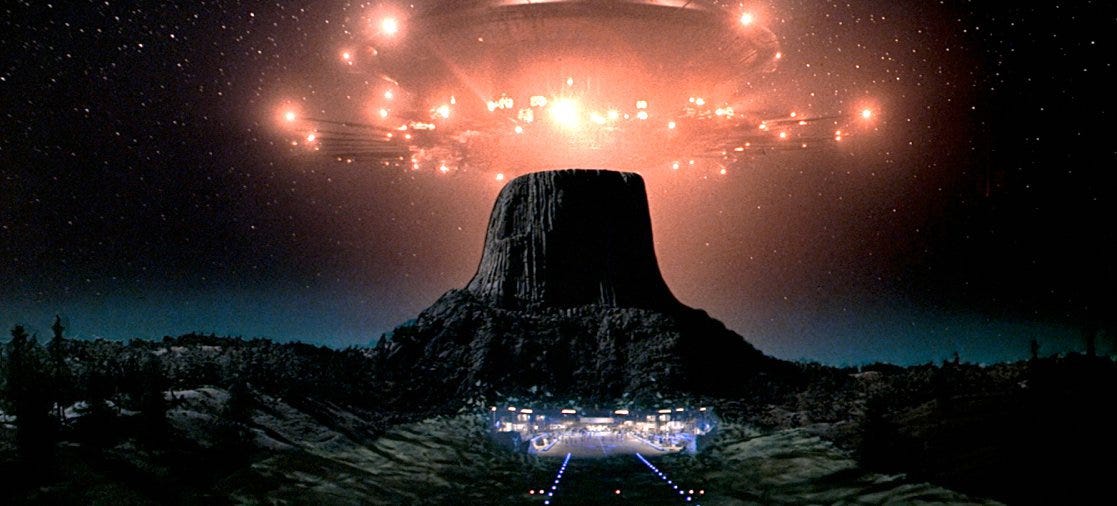
Nowhere was this intermixing of themes more exhibited than in Spielberg’s 1977 blockbuster Close Encounters of the Third Kind. In the film, Roy Neary (Richard Dreyfuss) was part of a mass UFO sighting in Indiana, which leads him a secret government program to understand and even communicate with these craft, an effort that was being covered up from the public.
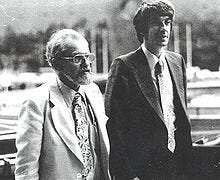
In the film, the key investigator is a French scientist, Lacombe (Francois Truffaut), who was rumored to be very loosely based on real life venture capitalist and well-respected ufologist, Dr. Jacques Vallee. After Vallee had moved to the US and gotten his PhD in computerized database, he was recruited to Northwestern by Hynek and helped on the US Air Force’s public UFO program, Project Blue Book. If that wasn’t enough of an overlap, Hynek not only came up with a classification of sightings that gave Spielberg a name for his film, but the professor also made a cameo in the film’s climactic scene when the alien ship landed near Devil’s Tower in Wyoming, , complete with his trademark professorial pipe.
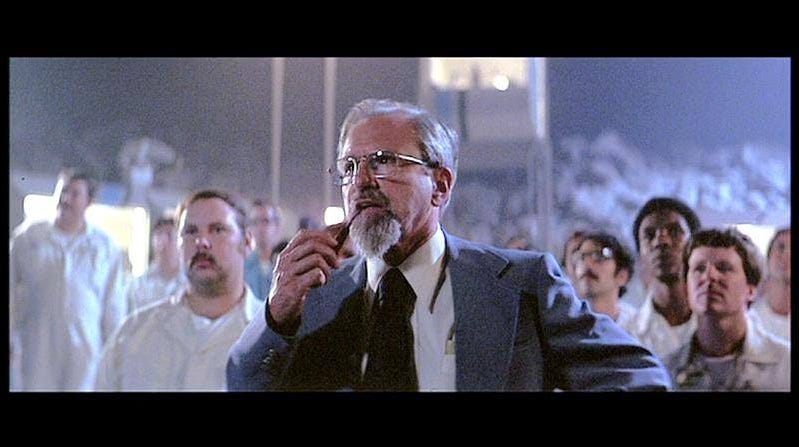
The idea of unexplained mass sightings didn’t emerge from science fiction but from real world reports. The US and Europe have had a number of mass sightings of UFOs, some of which were investigated by Hynek and Vallee. This included the mass sighting near Grand Rapids, Michigan in the 1960s. Hynek, in an attempt to explain away the sightings and to calm down residents, suggested that it could have come from “swamp gas”. This explanation angered the witnesses so much that it led to the constituents congressman, Gerald Ford (who later became President) to lead congressional hearings on the UFO subject. It would take 50 years before congressional hearings on the subject resumed, with the current crop of whistleblowers.
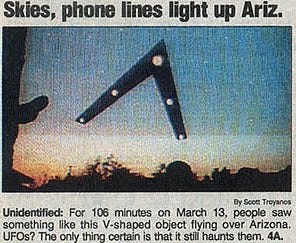
Mass sightings of UFOs didn’t stop in the Blue Book era. One of the largest mass sightings in US history occurred two decades after Close Encounters, dubbed the Phoenix Lights on the evening of March 13, 1997, which created national headlines after a group of seemingly interlocked lights flew directly over the Phoenix metro area and witnesses reported that it blocked out the stars as it flew overhead. After much public speculation, the governor of Arizona at the time, Fife Symington, held a press conference on June 19, 1997 to try to calm everyone down by having an aide come out in a rubber alien suit, ridiculing the idea that the lights represented “aliens”.
The other theme that comes out clear from Close Encounters and echoes to this day, even in the current class of documentaries, is the idea of a government cover up of its knowledge of UFOs. Surprisingly, while this narrative has been fueled by many whistleblowers, it was Hynek himself who had helped to shape this by the time Close Encounters was being filmed. Hynek later came out and said that Project Blue book wasn’t a sincere effort to study UFOs, but was simply trying to calm down the public, even if it meant coming up with implausible alternate explanations. Hynek would later become one of the leading voices in favor of seriously studying UFOs in debates with skeptical scientists like Carl Sagan who tried to dismiss the UFO phenomena. Hynek later would write extensively about the mystery and is now considered a hero in the world of ufology because of his courage to admit that these mysterious events and sightings shouldn’t be dismissed but should be seriously studied.
In a similar mea culpa which continues to fuel the theme of a government cover-up, Symington, the Arizona governor with the dismissive press conference, later came forward and admitted on the record that he himself had been a witness to the Phoenix Lights mass sighting and had no idea what the craft was that he saw. Symington stated “that he saw a large triangular ‘craft of unknown origin’ with lights, moving slowly.” He added: “It was dramatic. And it couldn’t have been flares because it was too symmetrical. It had a geometric outline, a constant shape.”
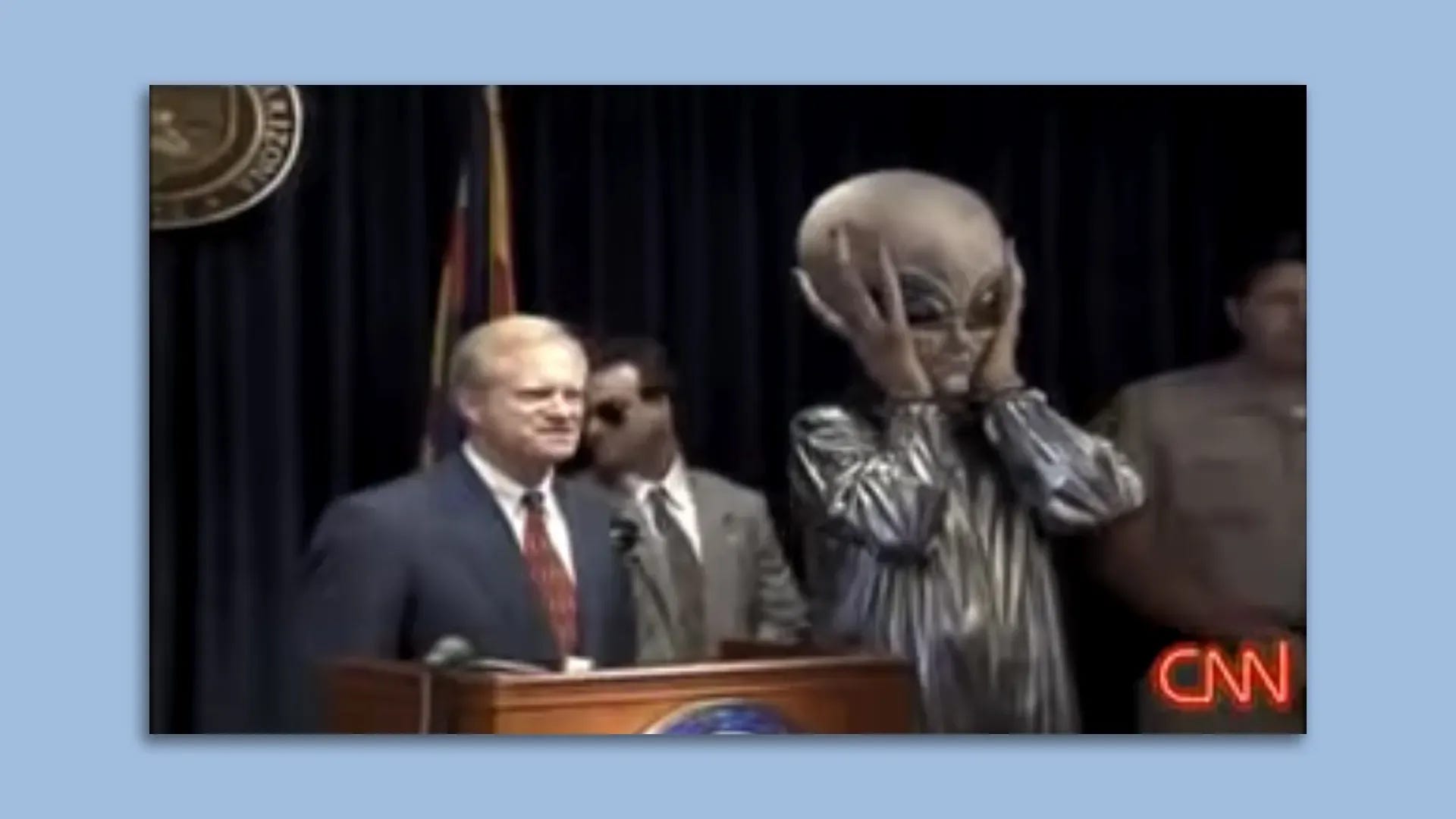
The press conference ridiculing the idea that it could be aliens shows the knee-jerk reaction that science fiction often influences discussions of UFOs in official circles. Not only did Close Encounters raise awareness for the UFO issue, but its depiction of the occupants of the UFOs as being aliens, friendly ones at that, has had an impact on our current UFO discussion. Many academics, including those who search for extraterrestrial radio signals as part of SETI, or those who study astrobiology and exoplanets, all of whom are naturally interested in the idea of extraterrestrial life, are dismissive of the UFO subject. They cite the distances involved reaching even nearby stars as making “aliens” visiting us as unlikely. Given our lack of understanding of how interstellar travel could be achieved (other than sci-fi sounding terms like “warp drive”, which came from Star Trek), the whole subject is waived away as a conspiracy and “science fiction” rather than a real phenomena of unknown origin.
On a related note, science fiction may be to blame for the narrow way in which the UFO topic is always presented as “aliens” or “nothing”. The new term, NHI, or non-human intelligence, acknowledges that in the world of modern ufology, there are a number of theories about the origin of these unknowns, and the extraterrestrial (ET) hypothesis is only one.
The uncomfortable truth is that these craft may in fact be real (debunking all of the skeptics) but not extraterrestrial at all (debunking many believers who insist on the ET hypothesis is the answer) and may not represent a national security concern at all (debunking many of the whistleblowers positioning).
This includes one theory that they have been here on Earth all along, a theory which has its own links to science fiction as well; it is sometimes called the Silurian Hypothesis, which also has sci-fi origins: it was named after a reptilian race in Doctor Who which lived on Earth millions of years ago and has retreated to inside the Earth and are in a state of long term hibernation. Other theories are that they are actually time travelers from the future, a theory which was seriously put forward by Montana Technology’s Dr. Michael Masters, an evolutionary biologist.
Of the alternate theories have been put forward, one of the most prominent is from Vallee himself. Vallee put forth the idea in his 1969 book Passport to Magonia: From Folklore to Flying Saucers, that cultures have reported non-human beings for centuries. These stories, range the fae (commonly called faeries in English) in Celtic lore to many different names via European folklore. The stories told about these beings often resemble modern UFO accounts of encounters with small beings. Although Vallee didn’t meet Spielberg until well into the filming of Close Encounters, he suggested that he disagreed with Spielberg’s insistence that the craft could only be extraterrestrial.
The X-Files, Government Secrecy and Abductions
The themes of government cover-ups of encounters with unexplained “aliens” is probably prominent in the modern era of sci-fi because of the massive success and cultural impact of the TV series, The X-Files. This show that first aired in 1993 1990s raised public awareness of another aspect of modern ufology: the abduction phenomena. Many of the initial episodes of the show included elements from real world close encounter reports: seeing small gray beings, missing time, being taken aboard craft, etc.
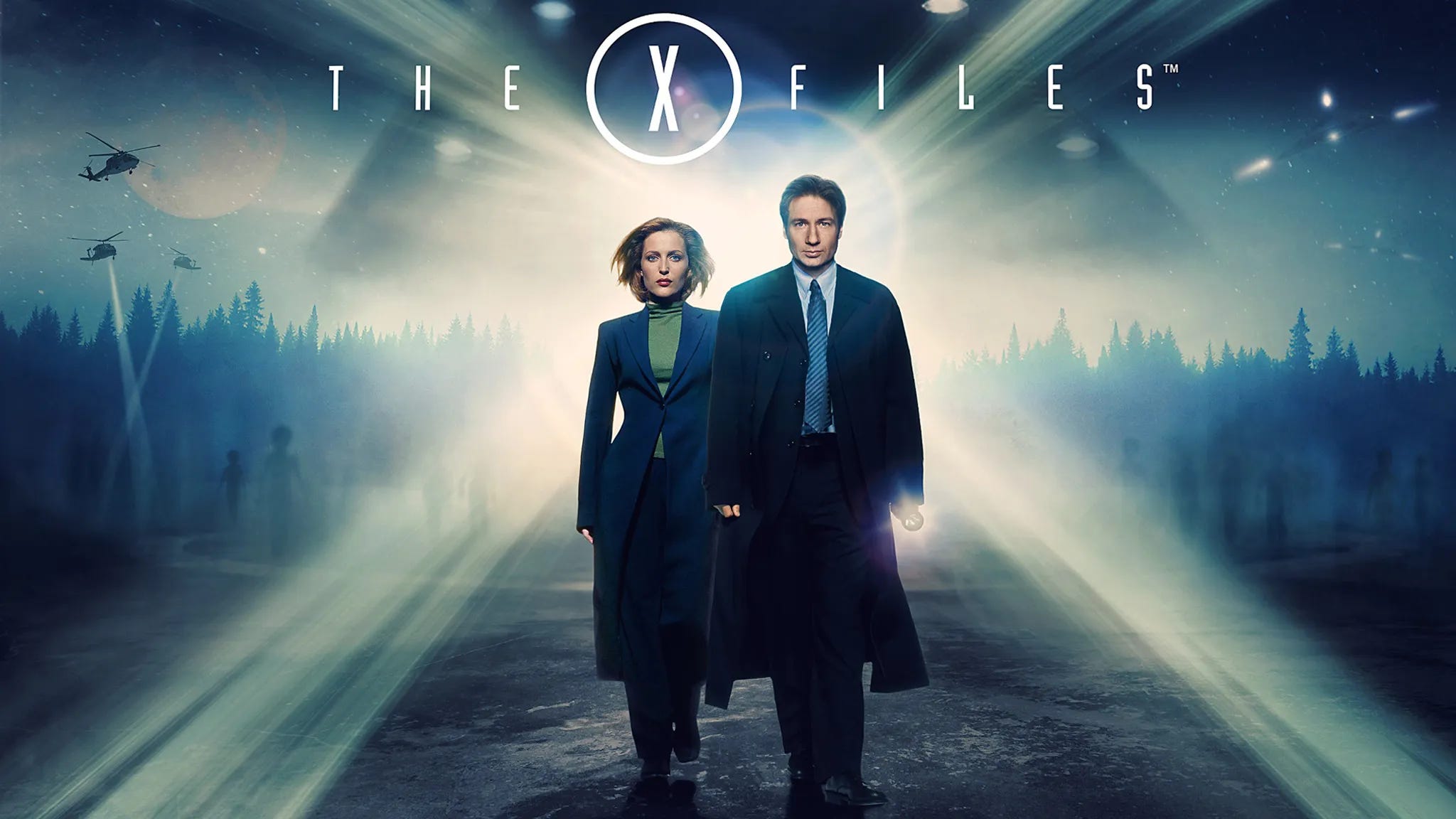
If the UFO phenomena in general has become more respectable (and the stigma somewhat lessened) because of recent news reports and government programs, the abduction phenomena remains stigmatized to this day and dismissed as hallucinations or sleep paralysis, not just in academia but even within certain corners of ufology.
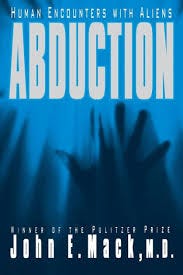
Despite this sci-fi interpretation of this phenomena as originating with “aliens”, there have been professors who have taken it seriously. When I was a student at MIT, there was a conference on the abduction phenomenon led by Harvard Medical School professor and chair of psychiatry, John Mack, who had been collecting stories of his patients that later appeared in his 1994 book, Abduction: Human Encounters with Aliens.. Mack was attacked in the press, and there was a commission set up by Harvard Medical School which Mack’s biographer, Ralph Blumenthal (incidentally a co-author of the 2017 New York Times article) and Mack’s initial lawyer for the proceedings, Danny Sheehan, have both compared to “inquisition”. Mack was cleared of any wrongdoing and no disciplinary action was taken when he agreed to be less conclusive in his claims of encounters with aliens and more clear about his methods, separating psychiatric patients from research subjects.
The X-Files follows two fictional FBI agents, believer Fox Mulder (David Duchovney) and skeptic Dana Scully (Gillian Anderson) on their search for the truth. Mulder’s search was inspired by the disappearance (and abduction) of Mulder’s sister in childhood. It’s hard to overstate The X-Files overlap with and influence on many young people of the time. Not only do many young women scientists reference the “Scully Effect”, which inspired them to go into STEM, but many modern UFO researchers might have a similar “Mulder effect”. One DOD scientist jumped at the chance to help out the UAP task force that was mandated by Congressional legislation. When she discussed it with colleagues, she said she relished at the idea of “helping to find Mulder’s sister”, a cultural reference that others would understand related to what might otherwise be considered a rather obscure topic.
Though The X-Files was fictional, it often referenced real world cases, including the famous Roswell incident. Rumor has it that series creator Chris Carter didn’t want his stars to appear at science fiction conventions because the show was (at least initially) based on real witness reports. I met Carter briefly through mutual friends in the mid 2010s, when he was in the Bay Area to attend, of all things, a UFO conference. This particular conference went to the deep end of the UFO conspiracy axis, much further than the recent crop of whistleblowers were willing to go. It was about the so-called “secret space program”, which alleges that not only have we recovered non-human craft, but that we have finished the reverse engineering effort and have a secret force of interplanetary and interstellar craft called ARVs (or Alien Reproduction Vehicles) that far outpace our public efforts at space, including those of NASA and private companies like SpaceX.
The allegations made at the conference seemed like science fiction, including one by Werner von Braun’s former assistant, Carole Rosin, about how the famous scientist had warned her about a fake staged alien invasion. I wondered what Carter thought of these, but Carter, whose presence at the conference was not advertised since he was there just as an attendee, was too busy feverishly taking notes on the allegations made at the conference. A few years later, I would see many of these same ideas play out in the revival of the X-files in 2016, complete with Mulder visiting a site with functioning ARVs.
Roswell, Independence Day and National Security Concerns
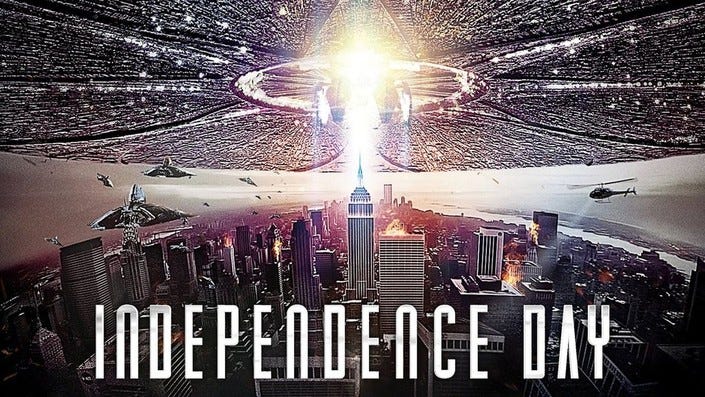
This brings us to perhaps one of the most common science fiction tropes: that of an alien invasion. The last time that UFO fever was at (or perhaps exceeded) current levels was at the height of The X-Files in 1996, with the release of the film Independence Day, about a surprise alien invasion. The film, of course, included modern UFO lore about craft recovered at Roswell, including alien bodies and a reverse engineering programs, which could have better prepared us for an invasion. In a sci-fi crossover that delighted fans at the time, the scientist in charge of this secret program was played by none other than Brent Spiner (best known as the android Data in Star Trek: The Next Generation). In an allegation that parallels current whistleblower complaints about secrecy, the lack of progress was blamed partly on the excessive secrecy and over classification. Not even the President knew about this program, as his CIA advisor tells him, it gives the chief executive “plausible deniability”, a theme which echoes in whistleblower accounts today.
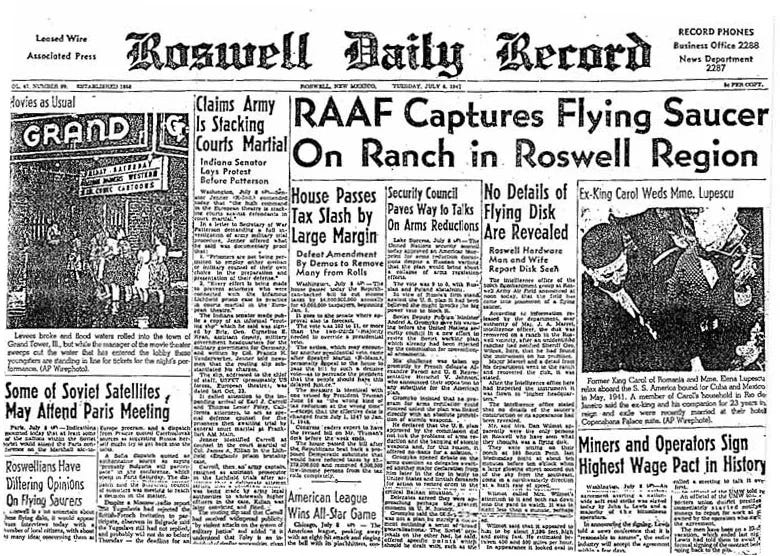
In 1947 in Roswell, New Mexico town that was home to the only nuclear-armed air base, i the U.S. Army Air Force initially declared in a press release that it had recovered a crashed “flying saucer”. The story quickly went viral, appearing in headlines across the world. A few days later, the Air Force retracted the statement and said that they had only recovered a “weather balloon”. This explanation has fueled speculation ever since Major Jesse Marcel, a key player in the incident who appeared in the picture with the weather balloon debris, later suggested that there was a cover-up and that an actual flying saucer had been captured.
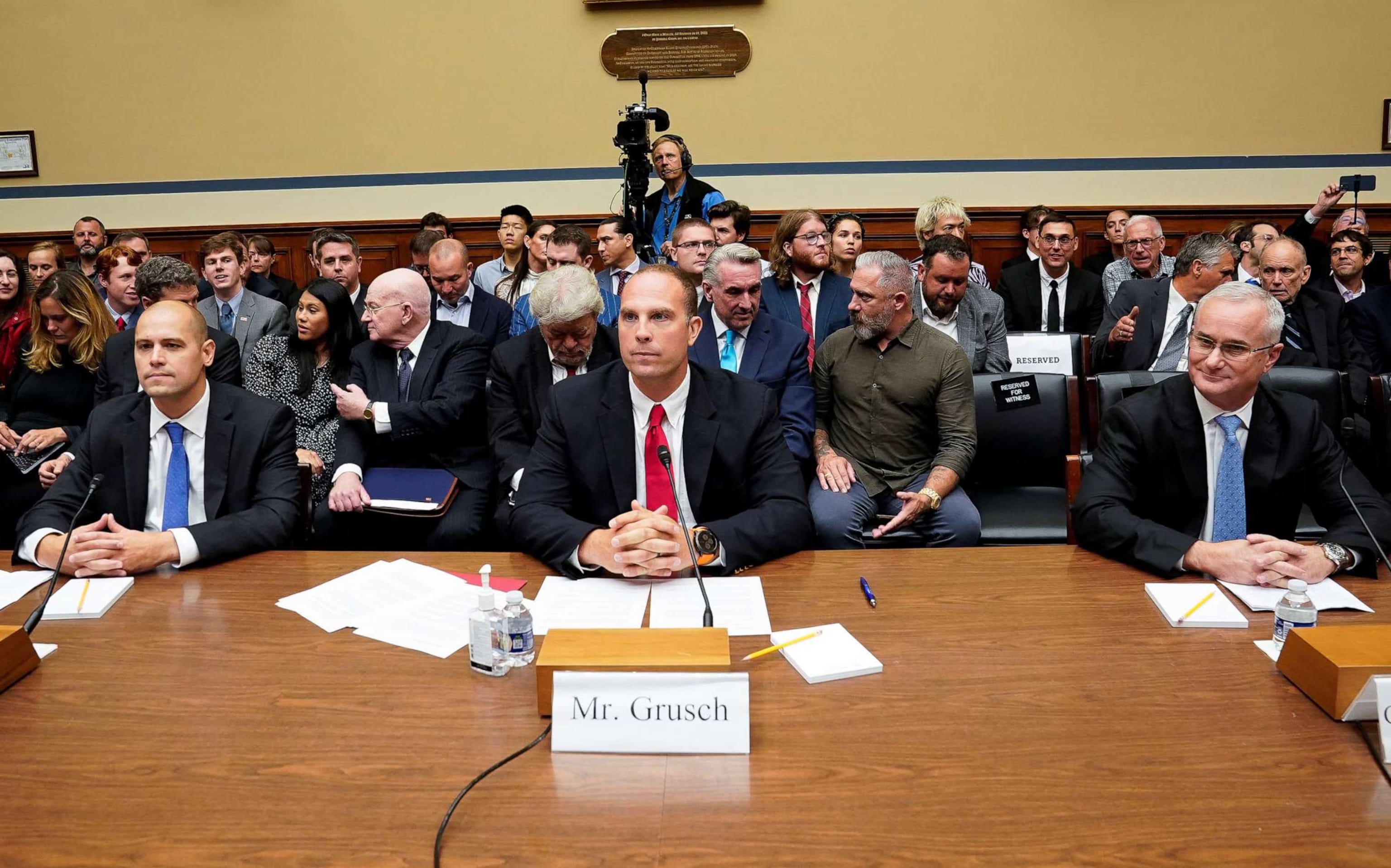
Which brings us back to one of the key allegations made in the new film, Age of Disclosure, which were also made directly to Congress in 2023 by whistleblower, UAP Task Force member and National Reconnaissance Office employee David Grusch: that we are in possession not only of recovered craft, but also alien bodies (or as Grusch called them, “biologics”). Such craft today be classified as TUO (technology of unknown origin), another official Congressional acronym that was in the UAP Disclosure Act. Rubio states in The Age of Disclosure that there are reports of classified programs that even the President may not be aware of, and tells us in an interview with Fox News recently that “admirals, generals and other officers” have reported not only the sightings but the coverup and the secret programs.
The framing of advanced alien technology and alien invasions pervades the UFO narrative. This is underscored by the fact many of the current crop of whistleblowers and interviewees in this new film, are or were part of the national security establishment, framing this as a national security issue. Two prominently featured whistleblowers in the Ag of Disclosure were DOD employees Jay Stratton, who headed up the UAP task force in 2021-2023 ( a precursor of today’s AARO), and Lue Elizondo, both of whom were instrumental in AAWSAP, the program mentioned in the 2017 New York Times article. Elizondo’s recent book, Imminent, was a New York Times bestseller, and Stratton’s book is expected to come out next year, eagerly anticipated even more now based on recent statements in The Age of Disclosure that he had seen both alien craft and alien bodies firsthand. I reached out to Jay to validate these statements, but he hasn’t responded.
The Independence Day version of UFO science fiction, of a hostile alien invasion, contrasts significantly with Close Encounters’ friendly aliens, though both seem to agree on some points. For one thing, they seem to echo that the government would deem UFO secrets to be covered up and the public not told.
These competing sci-fi visions also agree that if UFOs are real, then they must be extraterrestrial denizens of another planet coming to visit us in interstellar starships - i.e. the ET hypothesis. That is, of course purely a modern science fiction idea. Five hundred years ago, no one would claim unidentified lights or craft in the sky were extraterrestrial – at least that is, until science fiction took off as a genre in and of itself.
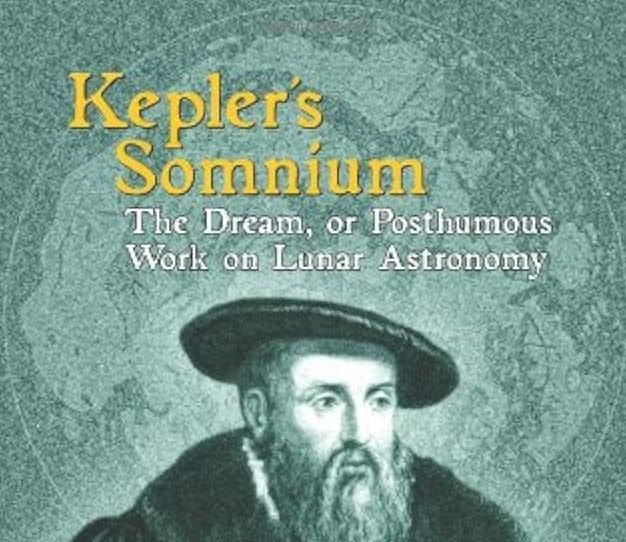
Historians of science fiction show how the genre arose as both a way to explain scientific concepts but also to project forward current scientific knowledge. The genre continues to evolve hand-in-hand with our knowledge of the universe around us. Kepler, known for his astronomical theories about the motions of the planets, is considered one of the first science fiction writers because of his novel Somnium, published posthumously by his son. Kepler’s aliens were residents of the moon, the only heavenly body we could really know much about the surface of at the time. Following the long arc of scientific progress, UFOs were presented as “little green men” from Mars in the early or mid-twentieth century as our telescopes taught us more about the surface of Mars. Today, UFOs are framed, often by both believers and skeptics, as representing alien interstellar craft, coming from planets on other stars in the galaxy, which we now know for sure exist, thanks to the appropriately named Kepler telescope.
This notion of interstellar visitors with advanced technology, fed to the public through generations of science fiction, is difficult to extricate from the UFO phenomena in the popular imagination. It is also used, even if subliminally, by the whistleblowers in the film and elsewhere framing the subject as a primarily a national security/defense issue.
But of course, the UFO question has implications well beyond the security of any single nation and may transcend both our current science and our current science fiction. The UFO subject has theological implications, political implications, scientific implications (across almost all scientific fields), economic implications, and in fact could change our knowledge and assumptions about the universe and our place in it. Today the public discourse in the media is often limited to UFOs could be alien technology invading our “sovereign airspace”.
It is possible, building on the ideas of Vallee, and as theorized by professors of religious studies like Jeffrey Kripal from Rice University and Diana Pasulka from University of North Carolina-Wilmington tell us, that these phenomenon are real but may have more to do with religion and the human experience than with aliens. The constant emphasis in films like the Age of Disclosure on the national security issues, and the constant stigma associated with the issue in scientific and academic circles, continues to obscure investigations into the true nature of this phenomena.
It will take more than a single documentary film to change perceptions in these areas, and for now, the real nature of UFOs remain “unknown” until there is an event which UFO enthusiasts refer to as “disclosure” and has been mentioned in the recent documentary and is the subject of Spielberg’s new film.
“Disclosure” itself is a mythical event envisioned in a certain way by UFO enthusiasts. Part of the reason, I suspect, it is viewed in this way is because we have all seen it already. Disclosure has been shown to the public in science fiction for decades: the President of the United States going on national TV at a press conference in the White House to announce that we are, in fact, not alone. This can’t help but inform o ur ideas about a future “disclosure” event.
Meanwhile, the sci fi feedback loop is still at work, being influenced by the latest and greatest revelations from UFO whistleblowers. Spielberg’s new film, coming out in June 2026, stars Colin Firth and Emily Blunt. Although we don’t know exactly what the plot will be about – its temporary name gives us a pretty strong clue: Disclosure.
Inevitably, there will be more UFO-themed films, both dramatic science fiction and sober documentaries, probably echoing and expanding on the themes we’ve outlined here. Until the mythical disclosure event arrives (and possibly even after such an event), the truth at the heart of this particular phenomenon will probably remain a mystery.
You might even say, if you are a fan of The X-Files, that the truth is still out there.
About Rizwan Virk
Dr. Rizwan Virk is a computer scientist, entrepreneur, venture capitalist and video game industry pioneer and bestselling author. He is a graduate of MIT and Stanford, founded Play Labs @ MIT, is currently with ASU’s Center for Science and the Imagination, teaches at ASU’s Fulton Schools of Engineering, and is part of the Future of Being Human Initiative. He is the author of The Simulation Hypothesis, The Simulated Multiverse, and Wisdom of a Yogi. He recently completed his doctoral research at ASU’s Center for Science and the Imagination, a
Follow him on Instagram @rizcambridge, on X @rizstanford, and at zenentrepreneur.com.